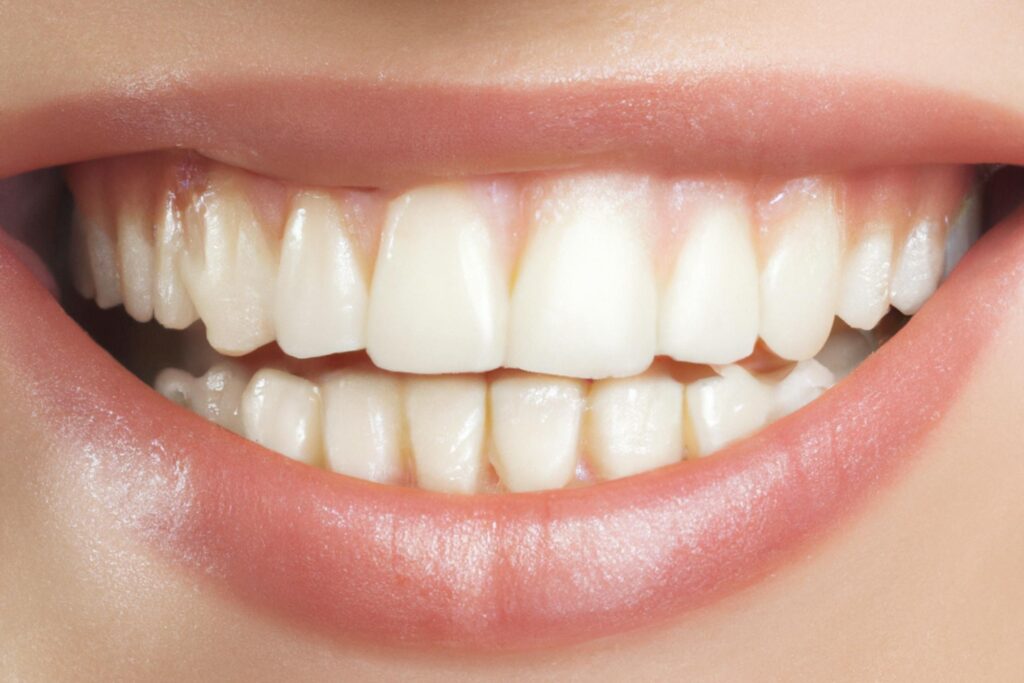
Want a brighter, healthier smile without any hassle? Maintaining oral hygiene is not just brushing twice; it is about regularity and right technique. Here are 7 essential oral hygiene habits that will help you prevent cavities, freshens your breath and keep your gums healthier than ever.
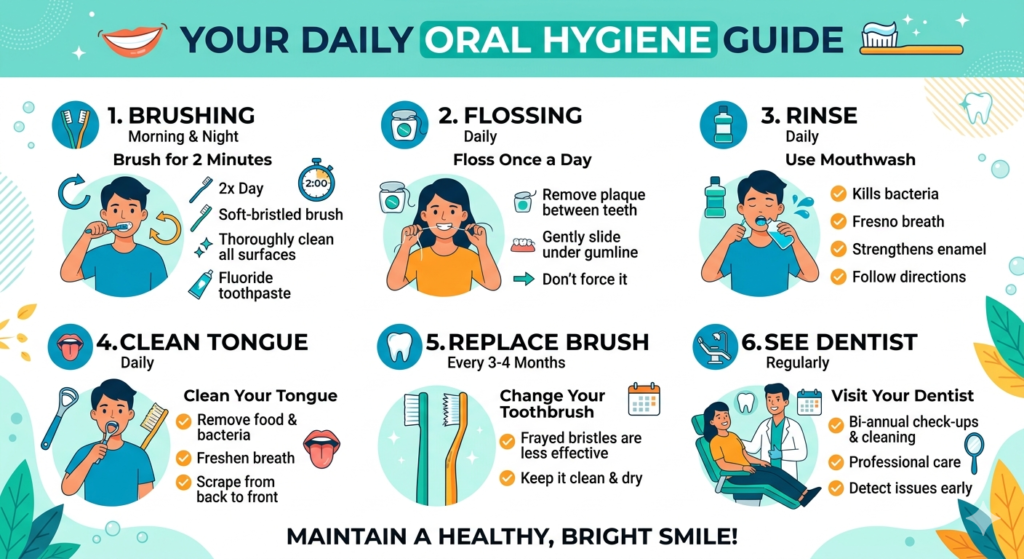
CONTENTS
What is oral hygiene?
Oral hygiene is the practice of cleaning your mouth, teeth and gums to keep them free of disease, primarily through brushing and flossing regularly. It is essential to prevent tooth decay, gum disease and other diseases of the mouth and to maintain oral health.
Oral Health
Oral health is a standard of health of the oral and related tissues which enable an individual to eat, speak and socialize without active disease, discomfort or embarrassment and which contributes to general well-being. Maintaining oral health also improves overall health including cardiac health.
Methods to maintain oral hygiene
1. Tooth-brushing
Brushing your teeth twice daily is the ultimate way to achieve good oral health. There are many effective method for tooth brushing.
Practical tips to Properly brush your teeth
| FAQ | Ans |
|---|---|
| When to brush? | Twice daily - in the morning and before bed. |
| Which brush to use? | Use soft or ultra-soft brush |
| How much paste to use? | Only a pea size amount |
| What is the duration for brushing teeh? | Only 2 minutes |
| Which tooth paste to use? | Any toothpaste containing fluoride (1000 ppm for adults) |
Brushing Methods
Modified Bass Technique : Here are 5 easy steps to perform this method of tooth brushing:
- Place a toothbrush at an 45° angle to the gums
- Exert gentle vibratory pressure, using short back and forth / small circular motions
- Complete 15-20 strokes, total of 2 minutes
- Sweep the bristles downwards towards the chewing surface
- Change your tooth brush in every 3-4 months
2. Floss Daily
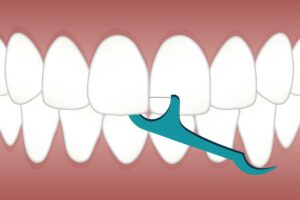
- Flossing once a day can be helpful to maintain oral hygiene. Flossing remove plaque in between tooth surface.
- Dental Plaque is a soft sticky colorless film of bacteria food particles and saliva that constantly forms on the teeth. It is responsible for tooth decay, bad breath and gum diseases. It also helps to remove food particle stuck in teeth gaps.
3. Rinse your Mouth
- Rinsing your mouth after every meal is very important for maintaining oral hygiene. After every meal food particles lodge in the creases and crevices of your teeth and even in between the teeth gaps.
- Rinsing your mouth properly can help this to remove. These food particles otherwise cause tooth decay, gum infections, bad breath etc.
Using mouthwashes for a short duration can also help.
4. Clean Tongue
Clean your tongue daily. It removes bacteria and food debris from your tongue. It freshens your breath. Scrape from back to front of your tongue. Tongue cleaner should not be sharp, preferably made of plastic.

5. Avoid Sugar
- Tooth decay is mainly caused by some special types of bacteria, that already present in our oral cavity. Refined sugar and sticky sugary foods causes this bacteria to grow and produce acid which causes tooth decay. So avoiding sugary food can help control tooth decay.
- Which foods to avoid? 1. Sticky sugary food, 2. Carbonated and sugar containing drinks.
- Even if you consume these food, try to brush immediately after consuming. Taking sugary food like chocolates and sweets can be taken during meals and not in between meals to avoid there harmful effects.
6. Drinking water
- Fluoride is important for our teeth if it present within safe limits. If it exceeds in your drinking water, it can cause teeth stain, weakening of the tooth structures and even tooth loss.
- If your area containing excessive fluoride in water, use RO filtered water / mineral water to avoid fluorosis.
7. Regular Dental Check-ups
Even if you are maintaining all oral hygiene methods, these cannot ensure that you will not have any dental diseases. Dental diseases in early stages are mostly asymptomatic (does not cause any discomfort). So it is better to get checked form a qualified dental professional.
The ideal frequency to get checked from a dentist is in every 6 months.
Hope you will find this article helpful.
References:
- https://my.clevelandclinic.org/health/treatments/16914-oral-hygiene
- https://www.youtube.com/watch?v=VdjmGxq-X7M
-
[Essentials of Clinical Periodontology and Periodontics by Shantipriya Reddy; 5th edition]